
Losing a tooth can feel like a minor inconvenience, especially if it is tucked away in the back of the mouth where it doesn’t affect your smile. Many people assume that if they can still chew reasonably well, there is no rush to address the gap. However, your mouth is a complex, interconnected system where every tooth plays a vital role in maintaining the position of its neighbors and the health of the surrounding bone.
When a single tooth is removed, it sets off a chain reaction that can eventually compromise your entire oral structure. Understanding what happens beneath the surface is the first step in protecting your health and preventing a single missing tooth from becoming a much larger, more expensive issue later.
Supporting Oral Health for Our Phoenix and Tempe Neighbors
At Oral & Facial Surgeons of Arizona, we understand how a proactive approach to tooth replacement changes lives. Serving the Phoenix and Tempe communities through our two modern, fully equipped facilities, our oral surgeons, Dr. Golding and Dr. Sabol, focus on providing advanced restorative care that goes beyond just filling a gap. We specialize in dental implants, a modern solution to replace a missing tooth, designed to replicate the natural function of your teeth.
Our goal is to help our neighbors in the Valley maintain their oral health through precision and specialized care. By addressing a missing tooth early with a fixed solution, we can stop negative shifts in the mouth and ensure your bite remains stable for years to come.
How Missing Teeth Impact Your Remaining Smile
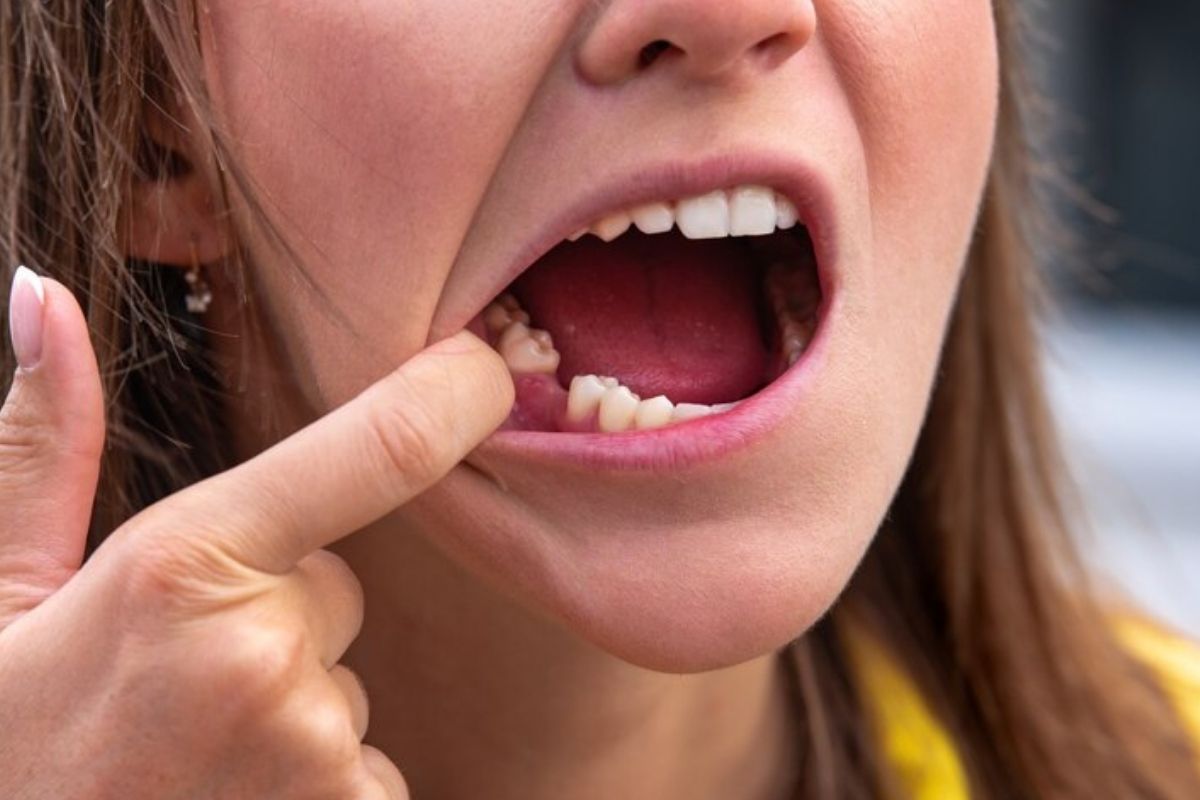
The most immediate problem following tooth loss is the movement of the remaining teeth. Your teeth rely on their neighbors for stability, much like the stones in an arch. When a gap is created, the balance of your entire mouth is disrupted, leading to several specific complications:
- Teeth Tilting and Drifting: Without a “backstop” to hold them in place, the teeth on either side of the gap will naturally begin to lean and slide into the open space. This shifting can cause your once-straight smile to become crooked and misaligned.
- New Gaps and Hygiene Risks: As teeth move, they often create small, irregular gaps between other teeth. These new spaces become “food traps” that are difficult to reach with a toothbrush or floss, significantly increasing the risk of localized tooth decay and gum disease.
- The Problem of Supra-Eruption: This is perhaps the most surprising consequence. When you lose a tooth, the opposing tooth (the one directly above or below the gap) no longer has a surface to bite against. Without that constant counter-pressure, the tooth can actually begin to “extrude,” or grow out of its socket and into the empty space.
- Bite Misalignment and Sensitivity: As teeth drift and supra-erupt, your bite no longer meets correctly. This can lead to increased tooth sensitivity, uneven enamel wear, and even chronic jaw pain or headaches.
Structural Changes: Jawbone Resorption and Facial Aging
While shifting teeth are visible to the naked eye, the most significant damage occurs beneath the surface within the jawbone. Your bone stays dense and strong through constant stimulation from chewing pressure. When a tooth is lost, that stimulation vanishes, leading to several critical changes:
- Natural Bone Atrophy: Without a tooth root to transmit energy, the body begins to reabsorb the minerals from that unused section of the jaw. This process, known as resorption, can lead to significant loss of bone width and height in a surprisingly short time.
- Changes in Facial Shape: As the jawbone thins and loses its volume, it provides less support for the overlying skin and muscle. This loss of internal structure can cause the lower face to appear “collapsed” or sunken, particularly around the mouth.
- The Appearance of Premature Aging: When the jawbone recedes, the distance between the nose and the chin can decrease. This structural shift often makes the chin appear more pointed and leads to deeper wrinkles, making a person look older than they are.
The Remedy: Why Dental Implants Are the Standard of Care
When it comes to replacing a missing tooth, you have several choices, but none provide the comprehensive benefits of a dental implant. While a traditional bridge can fill the gap, it requires the permanent alteration of the adjacent healthy teeth. Furthermore, a bridge does nothing to address bone loss because it sits only on top of the gums.
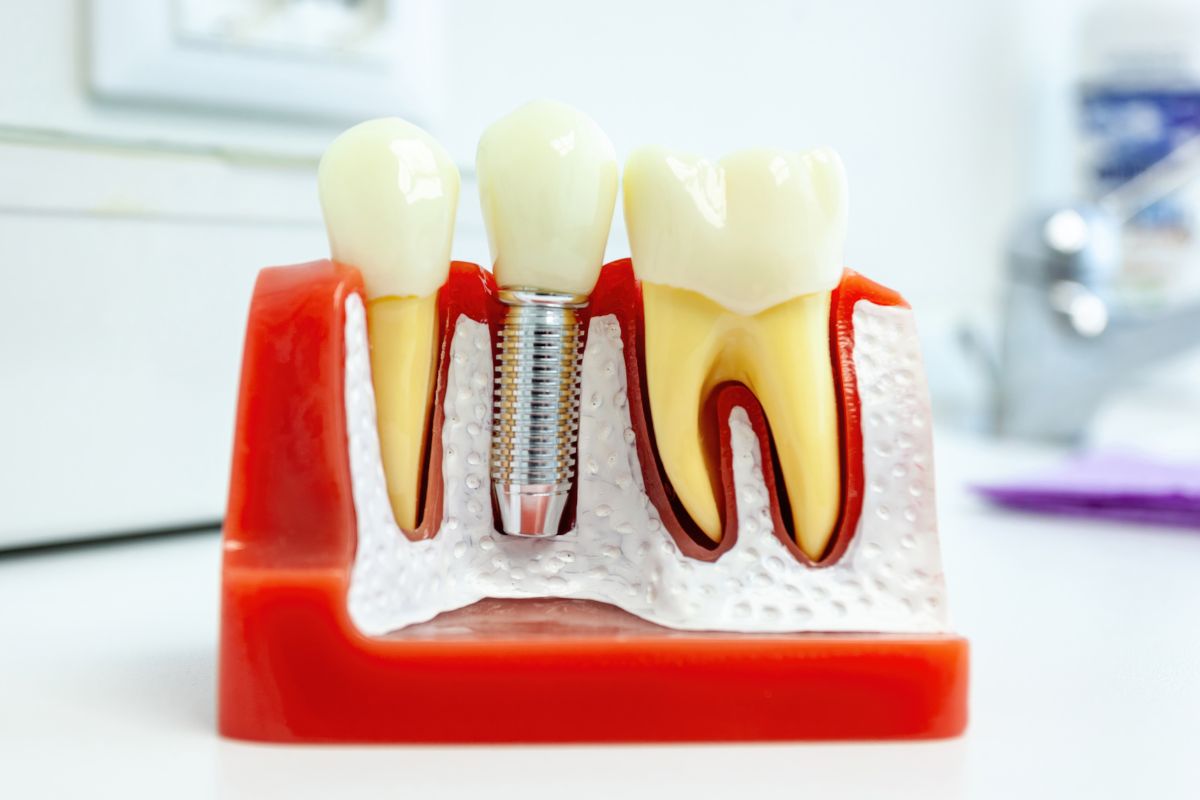
Dental implants differ because they replace the tooth root. A small titanium post is placed into the jaw, where it undergoes a process called osseointegration. This means the bone actually heals around the post, treating it like a natural root. This provides the necessary stimulation to keep the jawbone strong and prevents the surrounding teeth from drifting. For those looking for a solution that looks, feels, and functions like a natural tooth, implants are the most effective way to restore a healthy mouth.
Why You Need an Oral Surgeon for Your Implant Surgery
While many dental professionals offer tooth replacement, an oral and maxillofacial surgeon brings a higher level of specialized training to the procedure. After finishing dental school, an oral surgeon completes four to six years of additional hospital-based surgical residency. This training focuses specifically on the complexities of the bones, skin, and muscles of the face and jaw. If you have lived with a missing tooth for a while, you may have already experienced some bone loss. A specialist is uniquely qualified to perform advanced techniques like bone grafting or sinus lifts to rebuild that foundation.
Both of our offices utilize modern technologies to map out your anatomy with incredible precision before the procedure begins. This ensures the implant is placed in the optimal position for both aesthetics and long-term stability. Furthermore, as surgeons, we are experts in providing safe, comfortable sedation options to ensure the experience is as stress-free as possible.
Schedule Your Consultation: Protect Your Oral Health
Waiting to replace a missing tooth often leads to more complex problems that require more extensive care later. Whether your tooth was lost recently or has been missing for years, taking action now is the most effective way to preserve your remaining teeth and the structural integrity of your jaw.
If you are in the Phoenix or Tempe area, we invite you to visit Oral & Facial Surgeons of Arizona for a thorough evaluation. Our team will take the time to explain the current state of your oral health and help you decide on the right treatment plan for your needs.
We make it easy to access specialized care with two convenient locations in the Valley:
Phoenix Office: Nestled in the Arcadia area near the Camelback Corridor, this location is perfectly positioned for those coming from Old Town Scottsdale, the Biltmore area, and central Phoenix.
Phone: (602) 899-8127
Tempe Office: Located in North Tempe, just south of the Salt River and near Tempe Town Lake, this office serves the vibrant Downtown Tempe community as well as residents in South Scottsdale and the Rio Salado district.
Phone: (602) 900-9874
Reach out to our team today to find a time that fits your schedule and invest in the long-term strength of your smile and the health of your jaw.
Protecting the Future of Your Smile
A single missing tooth is more than just a gap; it is a signal that your oral health is at a crossroads. As we have explored, leaving that space empty triggers a gradual chain reaction that affects the alignment of your remaining teeth, the strength of your jawbone, and even your facial structure. By choosing a dental implant, you are doing more than just filling a space. You are proactively stopping the “domino effect” of shifting teeth and protecting your bone from dissolving over time.