5050 N. 40th Street, Suite 180, Phoenix, AZ 85018


Dental Implants in Phoenix
Complete Your Smile with Permanent Tooth Replacement in Phoenix
If you are struggling with the loss of one or more teeth, dental implants offer a revolutionary, permanent solution for your oral health. At Oral & Facial Surgeons of Arizona, we focus on restoring your smile with results that look and function like natural teeth. Our implants are placed by board-certified oral and maxillofacial surgeons. Our Phoenix-based surgical center is located on N 40th St and is conveniently situated to serve patients from the Biltmore area, Arcadia, and nearby Phoenix communities.
Our surgeons have the specialized training required to achieve the best possible clinical outcomes. Unlike many general dentistry practices, our Phoenix office offers a comprehensive approach to dental implant care. We provide every stage of the treatment process right here under one roof, including everything from the initial surgical consultation to final placement. By managing your entire case in our state-of-the-art Phoenix facility, we can improve your dental function and deliver a beautiful smile that lasts for decades.
Book Online
Learn more about:
What Are Dental Implants?
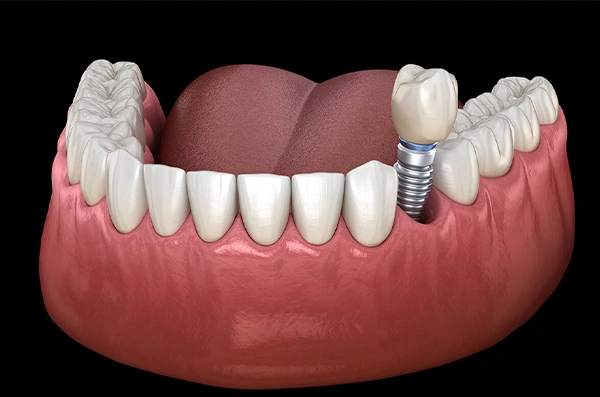
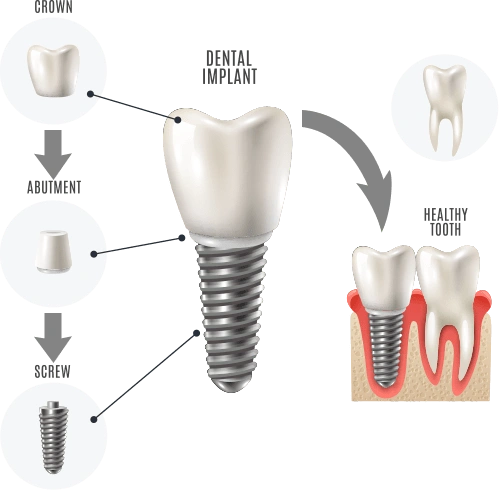
The dental implant is genuinely one of the most revolutionary developments the field of reconstructive dentistry has ever seen. Designed to replace missing teeth anywhere in the mouth, dental implants are made of titanium posts that are inserted into the gum and anchored to the jawbone. During a process called osseointegration, the implant should then fuse to the jawbone, mimicking the function of a natural tooth root. A custom dental crown is then affixed to the top of the implant. Ultimately, dental implants should look and feel like natural teeth, lasting many years with the proper care.
What Are the Benefits of Dental Implants?
Dental implants offer a full range of advantages over dentures and other traditional procedures designed to replace missing teeth. Some of the many potential benefits of dental implants include:
- Long-lasting results that look, feel, and function like original teeth
- Improved speaking and chewing
- Improved smile aesthetics
- Can be used to replace a single missing tooth or multiple missing teeth
- No movement or slippage along the gums
- No dental adhesives, putties, or pastes required
- No dependence on adjacent teeth for support
- Can reduce the likelihood of bone loss and other oral health problems in the area of missing teeth
- Other than daily brushing and flossing, no additional maintenance is required
Dental implants can also be used to enhance support for a partial denture or an All-On-4® fixed hybrid as an alternative to traditional dentures. We use only the best dental implant products at our practice, including implants from Nobel Biocare®, Straumann®, Dentsply (formerly Astra), Biomet 3i™, and BioHorizons®. Our oral surgeons will talk with you about the best option for your needs and goals during your initial consultation.
Am I a Candidate for Dental Implants?
Thanks to advanced technology and state-of-the-art implantation techniques, more individuals are candidates for dental implants today than ever before. It is important for patients to have adequate jawbone density in the area of missing teeth for the implants to be successfully accommodated; however, if you do not have the necessary amount of bone for the implant, there are treatment options available that can often address this concern. Bone grafting can often be performed to provide the implant with enhanced support, and for patients who are missing teeth in the upper jaw, zygomatic implants (described below) may be an option. These treatments have made it possible for many patients who have been previously told they do not qualify as candidates for dental implants to now be eligible for the procedure.
What Are My Tooth Replacement Options with Dental Implants?
Dental implants can be effective for a number of distinct needs, and there are a variety of ways they can be utilized for missing teeth replacement. Options include:
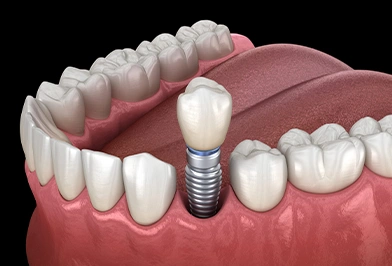
Single-Tooth Implants
A single missing tooth can create numerous problems, regardless of where it is located in the mouth. A dental implant can not only restore dental function and appearance, but can also reduce risks of jawbone deterioration and the serious effects an untreated missing tooth may have on oral health and the health of surrounding teeth.
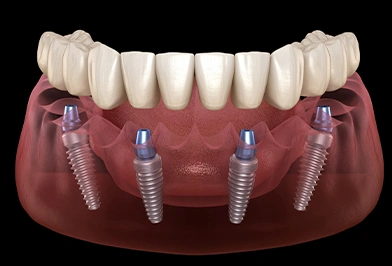
Multi-Tooth Implants
If you are missing several teeth, replacing each one of them with a dental implant may be the ideal option. This can be effective for missing teeth that occur in various places in the mouth, or for multiple teeth that are missing in a single area.
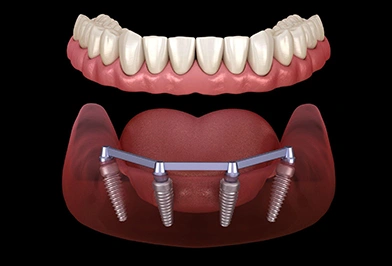
Implant Dentures
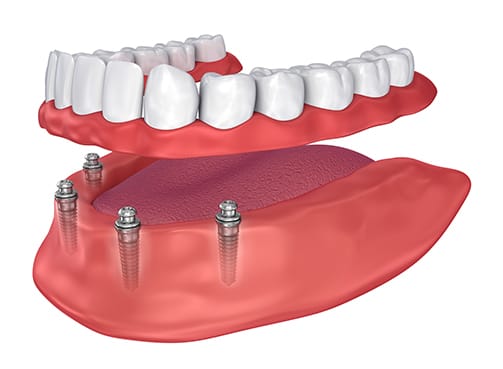
Implant dentures offer a “hybridized” way for individuals to replace all of their teeth on the upper and/or lower dental arch. This option can provide an exceptional alternative for patients who are not able to replace every single tooth with a dental implant. An advanced treatment such as the All-On-4® implant-supported fixed hybrid denture alternative uses just four dental implants to reinforce the stability of a custom denture, ultimately producing a secure fit without excessive reliance on denture adhesives or putties.
During your initial consultation, our oral surgeon will perform a comprehensive oral evaluation and explore the options for teeth replacement that offer the best solution for your needs and goals.
Bone Grafting Prior to Dental Implants
For individuals who do not have an adequate amount of bone density in the jaw to accommodate a dental implant, bone grafting can often provide an effective solution. This treatment involves the placement of a small bone graft on the jawbone under the missing tooth. The small bone should fuse to the larger bone, enhancing density and increasing the chance that an implant will successfully remain securely in place.
Learn more about bone grafting.
What is the Difference Between an Oral Surgeon and a General Dentist?
General and family dentistry oversee essential preventative and restorative care to help with long-term oral health. In addition to routine dental exams and x-rays, dentists most often provide gum care, dental fillings, root canals, veneers, bridges, crowns, and other procedures. However, patients will often need to see oral and maxillofacial surgeons to treat a variety of conditions affecting the face, mouth, and jaw.
Oral surgeons are medical doctors who receive extensive training for several years after completing dental school requirements, as well as specialized experience and rigorous testing to diagnose and treat:
- Missing teeth
- Teeth that require surgical extraction
- Obstructive sleep apnea
- Inadequate jawbone structure
- TMJ Disorder (temporomandibular joint disorder)
- Tumors and cysts of the jaws
- Accident injuries (face, jaws, mouth, and teeth)
- Oral cancer and other diseases in the maxillofacial region
- Other conditions in the oral and maxillofacial areas
Your primary dentist will generally refer you to an oral surgeon for these more complex treatments. Oral surgeons who have been certified by the American Board of Oral and Maxillofacial Surgery (ABOMS), as are Dr. Golding and Dr. Sabol at Oral & Facial Surgeons of Arizona, are examples of doctors who have very high levels of experience and skill in their field.
What Does the Dental Implant Procedure Involve?
Once you are determined to be a good candidate for dental implants, one of our experienced oral surgeons will create a customized treatment plan. Detailed x-rays and computer-generated maps of your oral structures will be developed and used as a precise surgical guide for placement of the dental implants. In many cases, dental implants can be placed utilizing local anesthesia. They will be carefully and meticulously inserted into the gum in the area of the missing teeth, and then securely anchored to the jawbone. Over the next few months, the implants should fuse to the bone and become a permanent fixture in your mouth, much like a natural tooth root. Temporary crowns can be placed on the implants during this period. Once bone fusion has occurred, the permanent dental crowns will be attached to the top of the implant posts. These crowns are completely customized to create results that fit comfortably and function like natural teeth. The crowns will be given a final polish, and then you should be ready to walk out of our office with a brand new smile!
What Can I Expect During Recovery from the Dental Implant Procedure?
Patients can expect some degree of bleeding and swelling in the treatment area following the placement of dental implants. Minor bleeding should clear up within 24 hours; if bleeding continues beyond that point, patients are encouraged to contact our office. Swelling in the cheek next to the implant site is normal and should dissipate over the next 36 hours. Soreness and discomfort after the anesthetic wears off can typically be well-controlled with over-the-counter pain medicine. Our doctor may prescribe additional medication in case severe pain is experienced during recovery. It is important to take antibiotics as prescribed in order to reduce the risk of infection as the treatment sites heal. Maintaining regular brushing and flossing habits is also necessary; however, patients must exercise caution and brush very gently around the implants until they have healed properly.
View our section on Care Instructions After Dental Implant Surgery to learn more about what to expect during recovery.
How Long Do Dental Implants Last?
One of the major benefits of dental implants is their ability to last long into the future. With proper oral hygiene routines and regular dental check-ups, your dental implants should continue to enhance your smile for decades to come.
Are Dental Implants Safe?
Our doctors utilize maximum safety precautions to reduce the risk of complications during dental implant procedures. While it is important to note that these treatments involve oral surgery, and surgical procedures always involve some degree of risk, Dr. Michael W. Golding and Dr. J. Gregory Sabol are extensively skilled and experienced with dental implant placement. The combination of our oral surgeons’ experience along with the use of advanced planning technology and treatment techniques can significantly diminish the potential for implant failure, infection, or other complications. We will also provide you with a list of post-operative instructions designed to help you achieve a safe and successful healing process.
Do Dental Implants Hurt?
Our oral surgeons prioritize comfort for patients during the dental implant treatment process. With the use of a local anesthetic, the treatment areas should be thoroughly numbed, and any discomfort should be minimized. For patients who would like even greater assurance that they will experience a virtually pain-free procedure, we offer a full array of advanced sedation and anesthesia techniques—including nitrous oxide, I-V sedation, and general anesthesia. Dr. Golding and Dr. Sabol are certified by the National Dental Board of Anesthesia and are committed to helping patients feel as comfortable as possible during treatment.
How Much Do Dental Implants Cost?
The cost of dental implants is dependent on each patient’s unique treatment plan. The price of a dental implant typically starts in the $2000 range. This is a common price range nationally. We pride ourselves in using only the best implants and implant materials. We only place implants by nationally known companies who back their implants with years of scientific research. Beware of advertisements with cheaper prices as these may be implants of lesser quality, implants not placed by a specialist, or implants with hidden costs that are added on later. Factors such as the number of implants necessary to achieve your goals, the complexity of the treatment, materials and laboratory fees, whether sedation techniques are utilized, and other associated expenses will be taken into account. Once your treatment plan has been developed at your initial consultation, a member of our team will produce a cost estimate that includes all price factors and go over it with you in detail. We will be happy to talk with you about the range of payment methods we accept here at Oral & Facial Surgeons of Arizona, which include dental financing plans through CareCredit®. We look forward to assisting you in finding the best way to bring the dental implant procedure into your budget.
What Are Some Alternatives to Regular Dental Implants?
Our practice offers a number of advanced treatments that utilize other types of dental implant techniques. During the initial consultation, our doctor will talk with you about all of the options available and help you determine the right treatment for your needs. Other dental implant options include:
Zygomatic Dental Implants
Zygomatic implants offer an innovative option for patients who have severe bone loss in the upper part of the jaw. These advanced implants are longer than traditional dental implants and are anchored to the strong area of bone that’s part of the cheekbone. Zygomatic dental implants do not require a bone grafting treatment and can be placed in a single surgical procedure. Patients who have lost bone density in the upper jaw due to gum disease, tooth loss, or other reasons may have been previously told they are not candidates for dental implants. With zygomatic implants, these patients may now qualify for the procedure. Our practice is very proud to offer these state-of-the-art implants, which can serve as a unique alternative for many patients who suffer from missing teeth.
Learn more about zygomatic dental implants.
All-On-4® Hybrid Dentures Alternative: Teeth in a Day
Implant supported fixed hybrid procedures can help patients who are missing multiple teeth add strength and stability to a denture appliance. The innovative All-On-4 technique utilizes four implants strategically placed on an upper or lower dental arch. A full custom denture is then securely affixed to the implants to provide a complete replacement of all missing teeth. All-On-4 can be a very effective option for patients who have lost all teeth on the upper and/or lower areas of their mouth. This “Teeth in a Day” procedure can also eliminate the need for bone grafting and an extended treatment process. With All-On-4, patients can arrive at our office with full rows of missing and leave their appointment with new teeth on the same day!
Learn more about the All-On-4 fixed hybrid denture alternative.
What Are the Negative Effects of Missing Teeth?
While missing teeth can have obvious and noticeable effects on dental function and smile aesthetics, it is important to know that they can cause a number of serious “hidden” consequences, as well. In fact, some of the negative effects of missing teeth may not even become apparent until serious damage has already developed. These effects can include:
View our section on Care Instructions After Dental Implant Surgery to learn more about what to expect during recovery.
Deterioration of the Jawbone
Existing teeth aid in the stimulation of jawbone growth. When one or more teeth are lost, the jawbone can deteriorate and weaken. This degradation can cause healthy teeth to loosen and potentially become fully dislodged.
Periodontal Disease, Gum Recession, and General Health Risks
Along with jawbone recession, gum recession can be caused by missing teeth, as well. This can lead to periodontal disease and other oral health problems. Gum disease has also been linked to increased risks of many conditions that can compromise overall health, including high blood pressure, heart disease, stroke, dementia, and even certain types of cancer.
Movement of Surrounding Teeth
When a tooth is missing, the existing teeth that surround it may begin to shift from their current position to fill the gap. This movement can ultimately result in severe misalignment, which can lead to chewing problems, bite irregularities, and effects on smile aesthetics.
Alterations in Facial Appearance
The loss of several teeth can affect the distance between the nose and the chin. If the proper distance is not restored by replacing the missing teeth, a condition known as “facial collapse” may develop, which can lead to a significantly altered facial appearance and cause one to look much older than they truly are.
Virtually all of these effects can typically be prevented with treatment designed to replace missing teeth and reduce the risk of further harm to oral health, function, and appearance.
How to Choose the Right Implant Specialist
Dental implant procedures are quite complex and involve a number of steps. These treatments require your chosen implant specialist to be exceptionally well-trained and skilled in order to provide successful, long-lasting results that look, feel, and function like natural teeth. Here are a few things to look for as you research your options:

Credentials, Experience, and Background
Please thoroughly review the professional history and credentials of your prospective oral surgeon/implant specialist. Since dental implant procedures require oral surgery and very precise treatment to ensure the implant succeeds and fits comfortably and naturally in the mouth, it is very important to get an idea of the doctor’s experience beforehand. For instance: Dr. Michael W. Golding and Dr. J. Gregory Sabol are board-certified oral and maxillofacial surgeons, enabling them to provide comprehensive dental implant procedures right here at our practice without having to refer patients to another office for specialist care.

Explore Patient Reviews and Testimonials
Reading patient reviews and/or watching video testimonials can offer you a glimpse into the experiences of others at a specific practice, which can provide a set of expectations in terms of the level of care and expertise available.

Inquire About Dental Implant Success Rates
Ask the practice about their rate of success for dental implant procedures, and see if you can find out an approximate number of these procedures the prospective implant specialist has performed.

Inquire About Technology, Materials, and Techniques
Find out more about the advanced technology, implant and dental crown materials, and techniques the practice utilizes to make sure they are high-quality.

Meet for an Initial Consultation
When you’ve narrowed down your selection, you can use the initial consultation with the doctor to finalize your choice. This meeting gives you the opportunity to evaluate your rapport, ask any and all questions you may have, and determine your level of confidence and comfort with the prospective implant specialist. You should always feel that your concerns are being addressed in an honest and thorough manner, and you should feel that this particular doctor has the experience and skills necessary to provide you with the best possible care.
Finalizing Your Decision with a Professional Consultation
The most important question isn’t whether you need an implant. It’s whether your surgeon can handle your case if it gets complicated: bone loss, prior implant failure, systemic health conditions, or full-arch reconstruction.
A consultation at Oral & Facial Surgeons of Arizona gives you the opportunity to meet your surgical team, review your imaging, and ask the questions that matter before you commit to treatment.
Book Online
Frequently Asked Questions About Dental Implants in Phoenix
New Patients Welcome!
For more information about our dental services or to schedule a consultation at Oral & Facial Surgeons of Arizona, please contact us today.